

Close Menu
InfovistarInfovistar
  • AI & ML
  • Cybersecurity
  • Money
    • Personal Finance
  • Insights
    • Tech News
    • Tech Tips
    • Startup
    • Web Development
    • AWS and Cloud
    • Technology
  • Courses
    • Machine Learning
      • Python Tutorial
      • TensorFlow Tutorial
      • OpenCV
    • DSA
      • Data Structures
    • Web Development
      • PHP Tutorial
      • CodeIgniter Tutorial
      • CodeIgniter 4 Tutorial
      • CodeIgniter 4 AJAX
      • JavaScript
    • Mobile App Development
      • Android Tutorial
  • Tools
    • Beautifier
      • HTML Beautifier
      • JavaScript Beautifier
      • CSS Beautifier
    • Online Compilers
      • Python Compiler
      • Java Compiler
      • JavaScript Editor
      • PHP Compiler
      • C++ Compiler
      • C Compiler
    • Image Optimization
      • Image Compressor
      • JPEG to PNG
      • PNG to JPEG
      • WebP to PNG
Trending News
AI-Powered Cyberattacks in 2026 How Hackers Use AI Agents

AI-Powered Cyberattacks in 2026: How Hackers Use AI Agents

November 21, 2026
US Outage Wave_ Microsoft, FAA, Banks, Apple-compressed

US Outages Explained: What Happened to Microsoft, FAA and Banks

November 18, 2026
Microsoft 365 Outage_ Outlook, Teams and Copilot Down. What We Know

Microsoft 365 Outage: Outlook, Teams and Copilot Down. What We Know

November 13, 2026
Facebook X (Twitter) Instagram
Sunday, November 22
Trending
  • AI-Powered Cyberattacks in 2026: How Hackers Use AI Agents
  • US Outages Explained: What Happened to Microsoft, FAA and Banks
  • Microsoft 365 Outage: Outlook, Teams and Copilot Down. What We Know
  • Diwali Online Shopping Scams 2026: 10 Ways to Stay Safe
  • 10 Best DDoS Protection Services for 2027
  • 12 Best Web Application Firewalls (WAF) for 2027
  • Best Ethical Hacking Tools in 2027: Free & Paid Picks
  • Software supply chain attacks 2026: Timeline and developer checklist
Facebook X (Twitter) Instagram Pinterest LinkedIn WhatsApp
InfovistarInfovistar
  • AI & ML
  • Cybersecurity
  • Money
    • Personal Finance
  • Insights
    • Tech News
    • Tech Tips
    • Startup
    • Web Development
    • AWS and Cloud
    • Technology
  • Courses
    • Machine Learning
      • Python Tutorial
      • TensorFlow Tutorial
      • OpenCV
    • DSA
      • Data Structures
    • Web Development
      • PHP Tutorial
      • CodeIgniter Tutorial
      • CodeIgniter 4 Tutorial
      • CodeIgniter 4 AJAX
      • JavaScript
    • Mobile App Development
      • Android Tutorial
  • Tools
    • Beautifier
      • HTML Beautifier
      • JavaScript Beautifier
      • CSS Beautifier
    • Online Compilers
      • Python Compiler
      • Java Compiler
      • JavaScript Editor
      • PHP Compiler
      • C++ Compiler
      • C Compiler
    • Image Optimization
      • Image Compressor
      • JPEG to PNG
      • PNG to JPEG
      • WebP to PNG
InfovistarInfovistar
Home » Hackers use fake Google Ads to Steal Microsoft Accounts
Cybersecurity

Hackers use fake Google Ads to Steal Microsoft Accounts

InfovistarBy InfovistarFebruary 1, 2025Updated:February 7, 20254 Mins Read
Share Facebook Twitter Pinterest LinkedIn Tumblr Reddit Telegram Email
Hackers use fake Google Ads to Steal Microsoft Acccounts
Share
Facebook Twitter LinkedIn Pinterest Email

Cybercriminals are now using fake Google ads to steal Microsoft advertising accounts. They create phishing pages that look real to trick users. These scams can lead to financial losses and data breaches. Advertisers must stay alert and protect their credentials.

How the Malvertising Scam Works

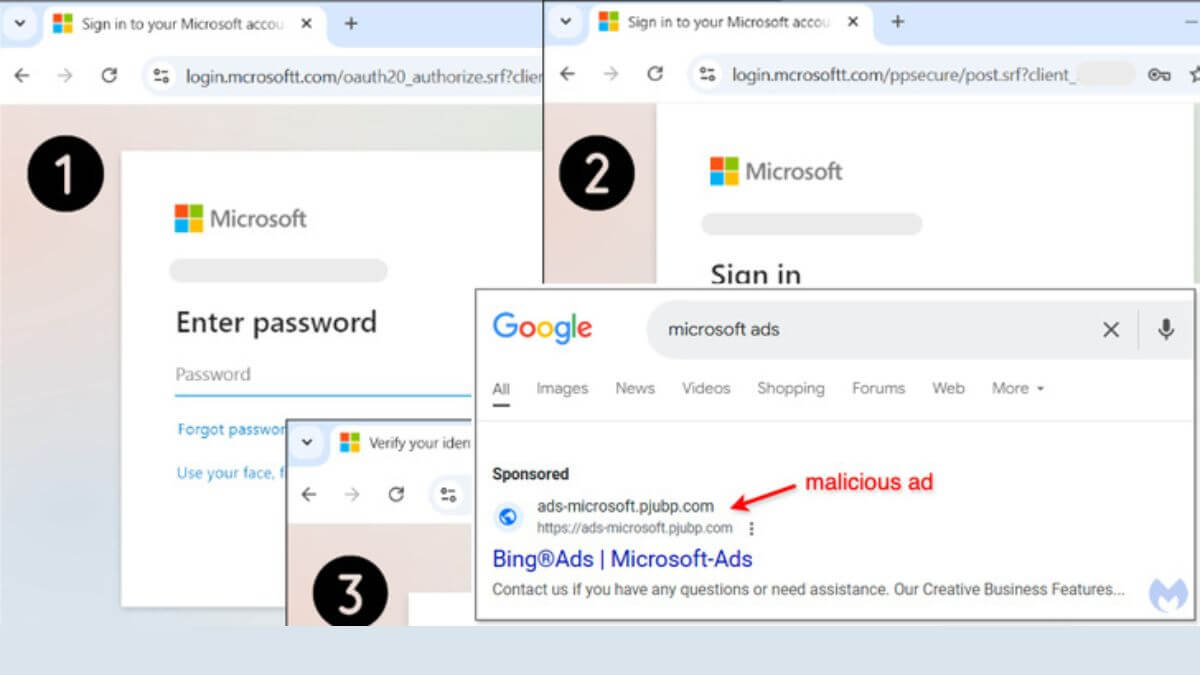
Attackers use Google Search ads to target Microsoft advertisers. Users searching for “Microsoft Ads” see fake sponsored ads. Clicking on these ads leads to phishing pages that steal login details. These pages look just like the real Microsoft Ads login page.

The attackers use several tricks to avoid detection. If someone accesses the fake site from a VPN, they are redirected to a harmless marketing page. Security tools often fail to detect these tactics.

Another interesting trick is how they handle direct visits. If someone manually enters the phishing site URL, they are redirected to a random YouTube video. This helps attackers avoid detection by security teams.

Why This Attack is Dangerous

This scam is very dangerous for businesses. It can result in:

  • Stolen login credentials and two-factor authentication (2FA) codes.
  • Unauthorized access to advertising accounts.
  • Misuse of advertising budgets for malicious campaigns.
  • Loss of sensitive business data.

The phishing pages capture login details and send them to attackers. Once they gain access, they can run fraudulent ad campaigns. This can drain company budgets and damage reputations.

Also read | Malvertising Attack Hijacks Google Ads Users Steals Credentials

Attackers Targeting Other Platforms

This is not the first time cybercriminals have used fake Google ads. A similar attack targeted Google Ads users. The attackers used fake domains ending in “.pt” (Portugal). Now, Microsoft’s advertising platform users are being targeted using “.com.br” (Brazil).

Cybersecurity researchers found phishing domains linked to Brazil. This suggests a large-scale operation targeting multiple advertising platforms. Even Meta (Facebook) advertising accounts could be at risk.

How Google is Responding

Google claims to take strict action against such scams. They say they remove fraudulent ads when detected. However, attackers keep finding new ways to bypass security checks.

Google encourages users to report suspicious ads. But the speed of response is often slow, allowing scams to spread.

Who is Behind These Attacks?

A Chinese-speaking group called Smishing Triad is suspected in the USPS scam. They have targeted postal services in over 100 countries. Their phishing-as-a-service (PhaaS) toolkit, called Darcula, is widely used.

Researchers believe these scammers are skilled in bypassing security tools. This explains why their campaigns are so successful.

Also read | Fake CAPTCHA Spreads Lumma Stealer in Multi-Industry Attacks

Smishing Attacks Target USPS Users

Along with fake ads, attackers are also using SMS phishing (smishing). They pretend to be from the United States Postal Service (USPS). They send messages about fake failed deliveries.
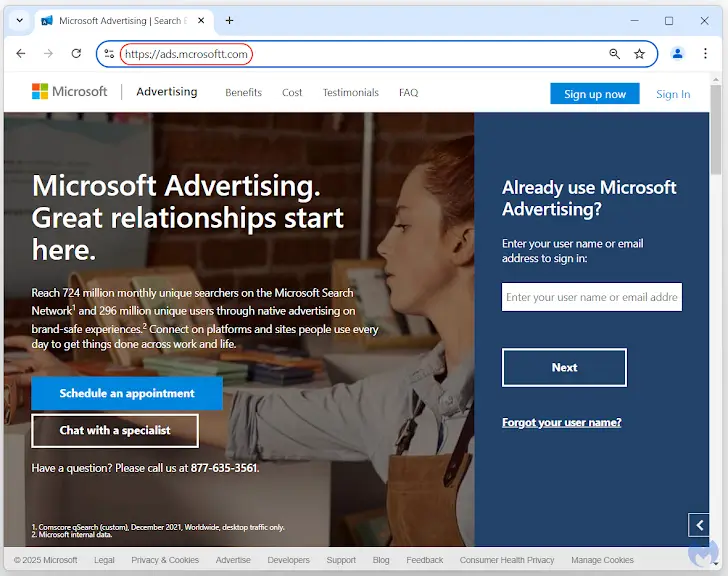
Fake Google Ads Steal Microsoft Advertising Accounts
Smishing Attacks Impersonate USPS

Victims receive an SMS asking them to update their address using a PDF file. Clicking the link leads to a fake USPS website. Here, users are asked to enter personal details, including payment information.

Researchers found that attackers use advanced techniques to avoid detection. The phishing pages even ask for credit card details, claiming a redelivery fee.

Also read | DeepSeek Security Breach Exposes 1 Million Log Lines and Secret Keys

Why Mobile Users are at Risk

Mobile users are easier targets for phishing scams. Many security tools work better on computers than on smartphones. Cybercriminals take advantage of this gap to trick mobile users.

They use special methods to bypass security checks. For example, iMessage normally blocks suspicious links. But attackers include text like “Reply Y to continue” to disable this protection.

How to Protect Yourself from Malvertising and Phishing Attacks

Online advertisers and mobile users should take steps to stay safe.

  1. Verify URLs Before Clicking
    Always check website addresses before entering login details. Scammers often use domains that look real but have small changes.
  2. Enable Multi-Factor Authentication (MFA)
    Use MFA to protect accounts. Even if attackers steal your password, they may not be able to access your account.
  3. Avoid Clicking on Suspicious Ads
    Do not trust sponsored ads, even on Google. Instead, type the official website address manually in your browser.
  4. Use Security Tools
    Install browser security extensions that warn you about phishing sites. Keep your security software updated.
  5. Stay Alert for Fake SMS Messages
    Do not click on links in text messages claiming failed deliveries. Visit the official website instead.
  6. Report Suspicious Ads and Messages
    If you see a suspicious ad, report it to Google. If you receive a phishing SMS, report it to your service provider.

Conclusion

Cybercriminals are getting smarter, using fake Google ads and phishing messages to steal sensitive data. Microsoft advertisers and mobile users must stay cautious. Always verify website links, enable extra security layers, and report suspicious activity. Staying informed is the best way to stay protected.
Fake Google Ads Malvertising Malvertising attack
Share. Facebook Twitter Pinterest LinkedIn Tumblr Email
Previous ArticleDeepSeek Security Breach Exposes 1 Million Log Lines and Secret Keys
Next Article What’s OmniHuman-1? AI tool makes videos from a single photo
Infovistar
  • Website
  • Facebook
  • X (Twitter)
  • Instagram
  • LinkedIn

Related Posts

AI-Powered Cyberattacks in 2026 How Hackers Use AI Agents
Cybersecurity

AI-Powered Cyberattacks in 2026: How Hackers Use AI Agents

November 21, 2026
US Outage Wave_ Microsoft, FAA, Banks, Apple-compressed
Cybersecurity

US Outages Explained: What Happened to Microsoft, FAA and Banks

November 18, 2026
Microsoft 365 Outage_ Outlook, Teams and Copilot Down. What We Know
Cybersecurity

Microsoft 365 Outage: Outlook, Teams and Copilot Down. What We Know

November 13, 2026
Add A Comment

Comments are closed.

Blog Categories
  • AI and ML (106)
  • Android (4)
  • AWS and Cloud (9)
  • Cybersecurity (85)
  • Money (12)
  • Personal Finance (6)
  • Startup (37)
  • Tech News (82)
  • Tech Tips (28)
  • Technology (73)
  • Web Development (25)
Top Posts
Google is rolling out Identity Check Feature to Android 15

Google is rolling out Identity Check Feature to Android 15

January 25, 20252,375 Views
How to Integrate Google Gemini to WhatsApp

How to Use Google Gemini with WhatsApp in 2026

February 16, 20241,913 Views
OpenAI Unveils Web-Based AI Agent Operator for Task Automation

OpenAI Unveils Web-Based AI Agent Operator for Task Automation

January 24, 20251,508 Views
Stay In Touch
  • Facebook
  • YouTube
  • WhatsApp
  • Twitter
  • Instagram
  • Pinterest
  • LinkedIn
Latest Articles

Subscribe to Updates

Get the latest tech news from FooBar about tech, design and biz.

About Us

Infovistar is a technology blog offering practical tutorials, programming guides, and the latest updates on AI, cybersecurity, software development, and digital technology.

Contact Information

Address: Nashik, Maharashtra, India – 422004
Email: infovistarindia@gmail.com
Phone: +91 89990 59150

Contact Us | About Us

DMCA.com Protection Status
Most Popular
AI-Powered Cyberattacks in 2026 How Hackers Use AI Agents

AI-Powered Cyberattacks in 2026: How Hackers Use AI Agents

US Outage Wave_ Microsoft, FAA, Banks, Apple-compressed

US Outages Explained: What Happened to Microsoft, FAA and Banks

Microsoft 365 Outage_ Outlook, Teams and Copilot Down. What We Know

Microsoft 365 Outage: Outlook, Teams and Copilot Down. What We Know

Our Picks
Binance Hack: $6.3 Billion Stolen, Largest Crypto Heist Ever

This Site Uses XSLT Chrome Warning Explained: How to Fix It

iPad mini OLED Price in India

iPad mini OLED Price in India: Wi-Fi & Cellular Variants, Offers

iMac M6 Price in India

iMac M6 Price in India: All Variants, Colors, Offers and Release Date

Facebook X (Twitter) Instagram Pinterest YouTube LinkedIn
  • About Us
  • Contact Us
  • Tools
  • Terms & Conditions
  • Privacy Policy
  • AdSense Disclaimer
© 2026 Infovistar. Designed and Developed by Infovistar.

Type above and press Enter to search. Press Esc to cancel.

Ad Blocker Enabled!
Ad Blocker Enabled!
Our website is made possible by displaying online advertisements to our visitors. Please support us by disabling your Ad Blocker.